Genuine tech legend
No memories yet.
OBSOLET. index95 out of 100
Genuine historical products, satirical writing, nothing for sale at OBSOLET.Real devices, satirical writing — nothing for sale.
The depiction follows references and may differ in detail.
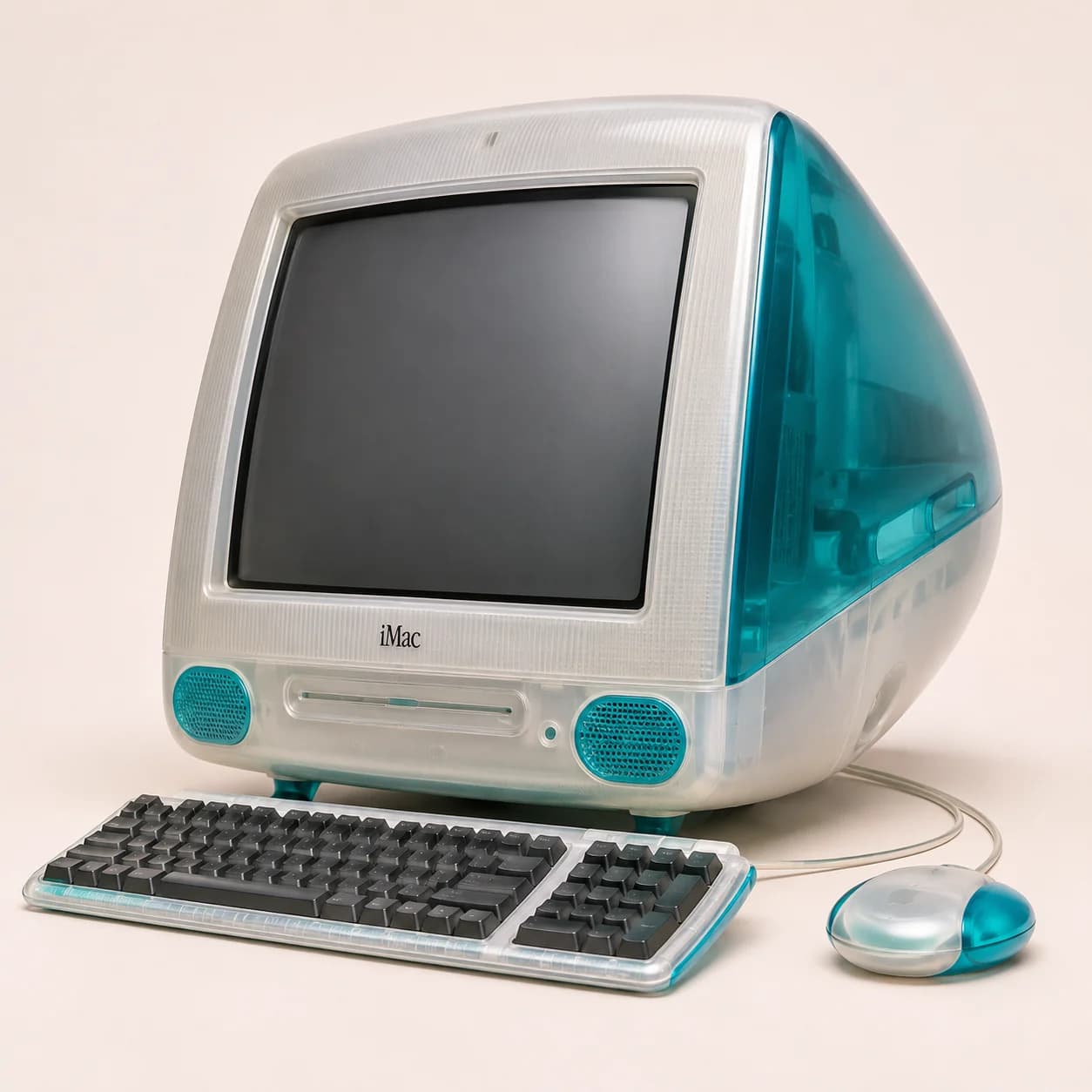
Internet computer, design object, picture tube included.
This device really existed. Maker, year and technical details are documented — only the price and the availability are invented.
Documented via: everymac.com
A catalogue entry, not an offer. This device is not for sale here. What can be documented is next to it: the original price of the day with its source, and what that buys today. Anyone actually looking for the device will find real partner offers further down — where there are any.
As a computer the iMac G3 is outdated at the decisive point: no browser exists for this system that can establish today's encrypted connections.
The computer that became famous for what it left out.
The iMac shipped without one, at a moment when the floppy was still the ordinary way to move a file between machines. The accessory trade filled the gap within weeks: Imation's USB SuperDisk became the standard follow-up purchase and read ordinary floppies alongside its own 120 MB. Apple had not so much abolished the drive as moved it out of the case and into the accessory catalogue.
In place of the usual assortment of sockets there was USB — and only USB. The iMac dropped ADB for keyboard and mouse, SCSI for drives and scanners, and both serial ports for printers and modems, all at once. What remained were two USB sockets, Ethernet and a modem. Anyone keeping existing accessories bought adapters; anyone buying new ones never needed another.
The case was tinted and see-through — a computer visibly declining to be beige. Behind it sat a 15-inch CRT which, with the power supply and shielding, brought the machine to a little over 17 kilograms. The handle on top was therefore not a styling detail but an admission that this thing occasionally has to be picked up.
A circular mouse came in the box. It was formally consistent and impossible to orient by feel, because top and bottom looked identical. It survives as the standard example of design consistency taken one step too far — the step being the point where a hand has to hold it.
Long replaced as a computer. As a decision to drop ports before customers ask for it, deeply influential — occasionally too influential.
An editorial assessment, not a documented fact. The sections above carry the evidence.
As a computer the iMac G3 is outdated at the decisive point: no browser exists for this system that can establish today's encrypted connections.
That removes the internet — the very task the machine was advertised for. What remains is a complete workstation with no network.
Opening old file formats no current viewer handles — and as a machine whose computer, screen and speakers are carried with one hand.
An editorial assessment, not a measurement: how completely has this device’s job been taken over by something else?
An editorial comparison: which job was taken over, and what falls away with it.
Editorial assessment. No paid placement, no partner link, no price comparison.
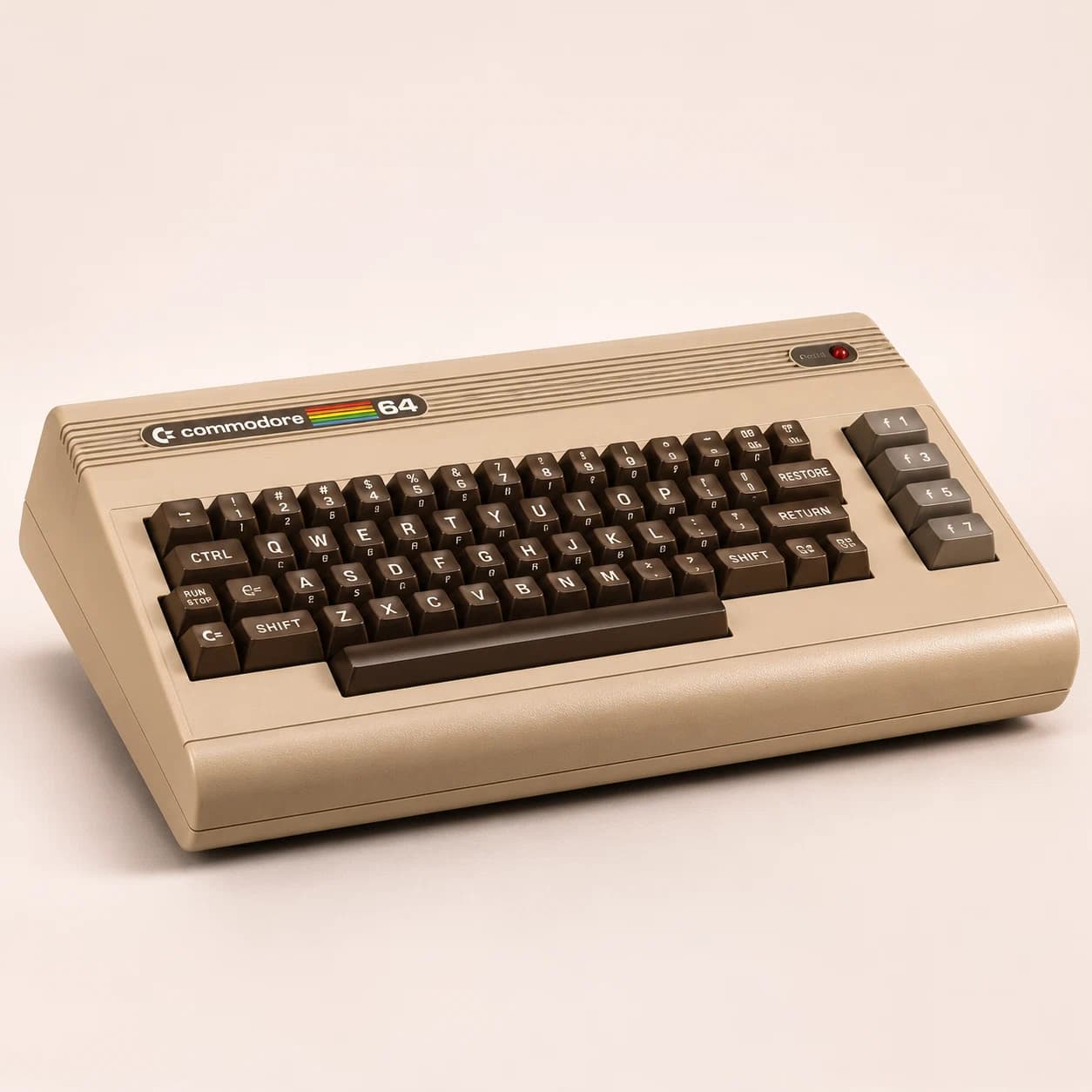
Two devices, one decision, no winner
| Specifications | ||
|---|---|---|
| 93 out of 100 | OBSOLET. index | 95 out of 100 |
| 1998 | Year | 1982 |
| No longer available | Availability | No longer available |
| Apple | Brand | Commodore |
What someone wants to know when picking the device up today. The answers are dry, but not invented.
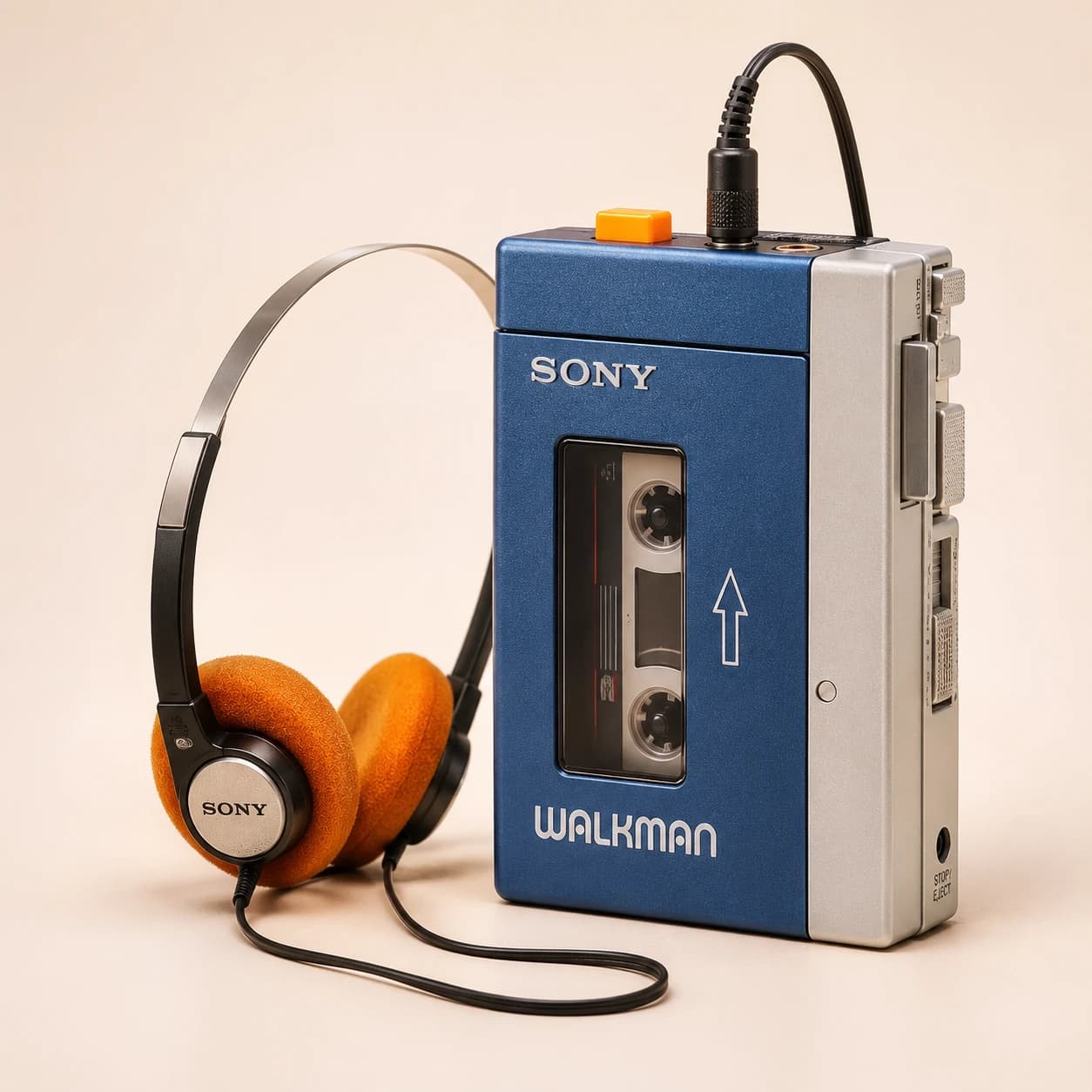
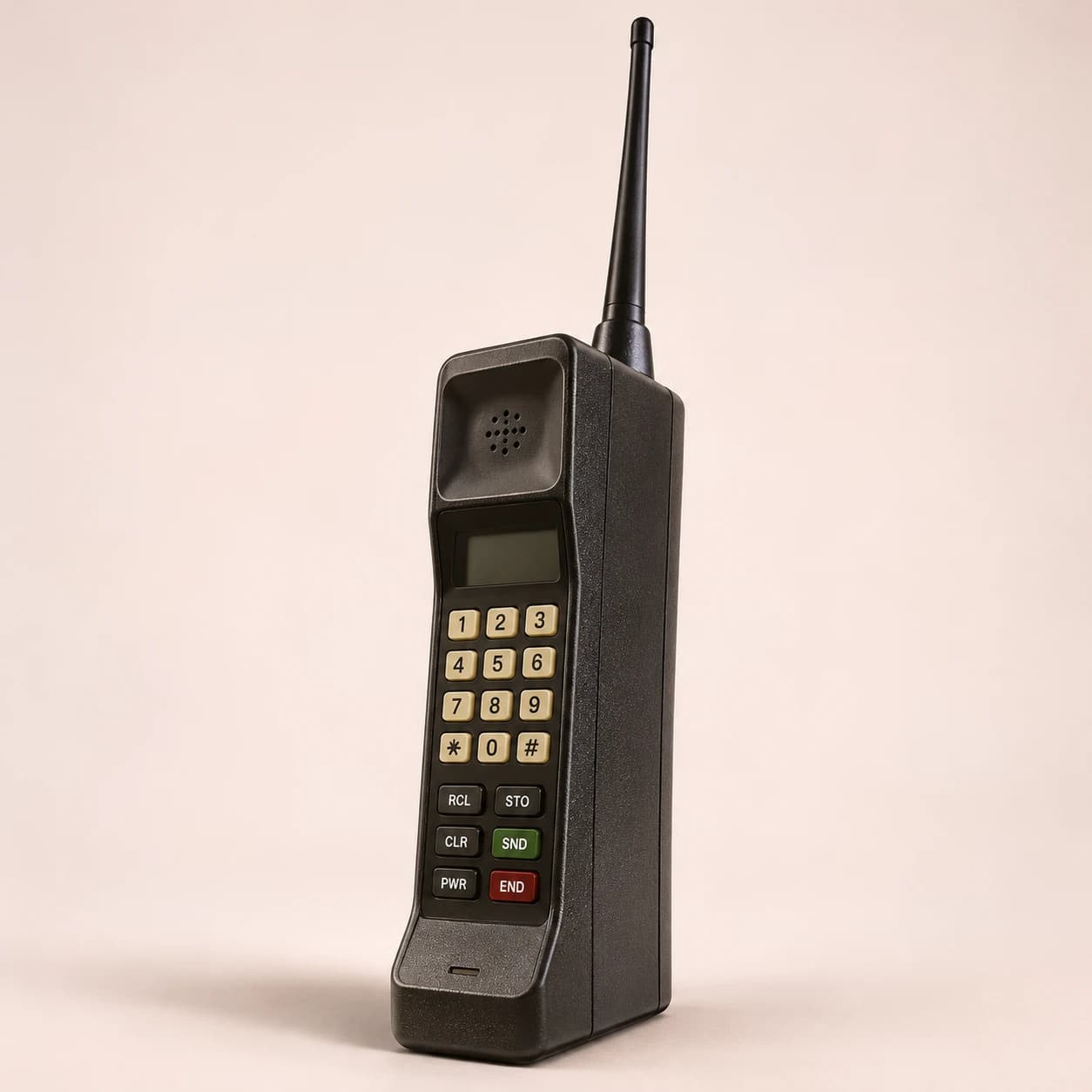
Because you clearly have taste
Documented via: ComputerBase, Beitrag „Apple iMac G3: Computersystem mit Mac OS 8“
Caveat: Taken from a secondary source. No contemporary primary document for this figure.
Note: Two independent German retrospectives give 2,999 DM for the launch in Germany (ComputerBase and appgefahren.de). Caveat: both refer to the presentation in May 1998, not to the sales start on 15 August 1998; a different price at the sales start could not be documented. A purchasing-power equivalent is shown for this amount.
Official series of the Federal Statistical Office of Germany. D-Mark amounts at the fixed rate of 1 EUR = 1.95583 DM, then adjusted using the consumer price index.
Documented via: Wikipedia (englisch), Artikel „iMac G3“
Caveat: Taken from a secondary source. No contemporary primary document for this figure.
Note: Announced on 6 May 1998, on sale from 15 August 1998 at 1,299 dollars. Revision C, introduced in January 1999, cost 1,199 dollars. No purchasing-power equivalent is shown for this dollar amount.
No purchasing-power equivalent: A price for the US market. The German consumer price index does not apply to it, and the index for that country is not available here.
The purchasing-power equivalent states what sum would carry the same general purchasing power today. It is not a current market price, not a retail price and not a collector's value.
Current listings from external marketplaces. OBSOLET. sells none of them — every link goes to the respective seller.
No matching listing found right now. The technology is evidently ahead of its time again.
Checked at 23/11/2026, 20:09. As soon as something appears, it will be here.
We do not search Kleinanzeigen automatically — but you can set up a saved search there yourself.
No memories yet.
Be the first.
Browsing listings needs no account. An alert keeps running on the server while you are away — that is what needs a sign-in.
Sign in