Genuine tech legend
No memories yet.
OBSOLET. index91 out of 100
Genuine historical products, satirical writing, nothing for sale at OBSOLET.Real devices, satirical writing — nothing for sale.
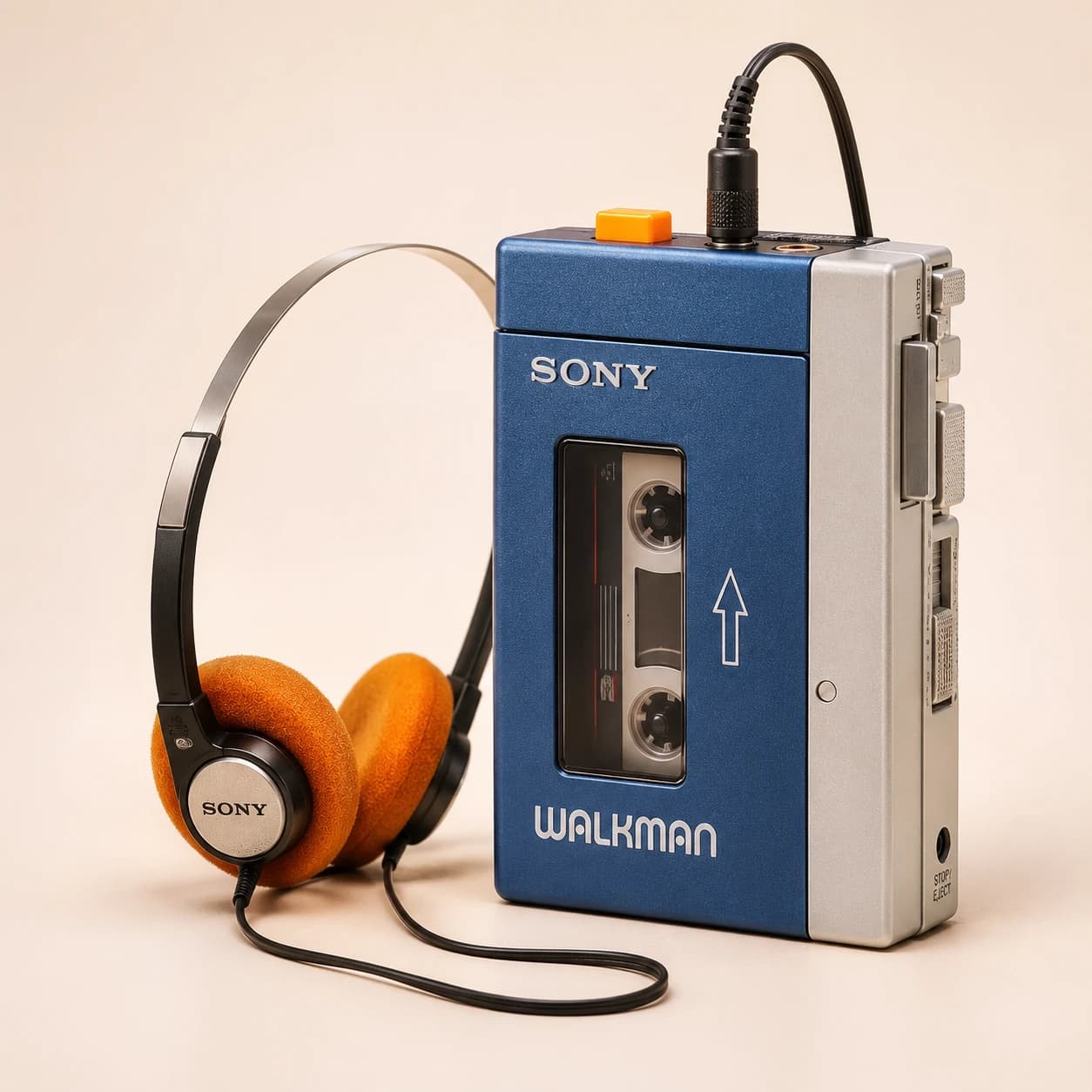
The depiction follows references and may differ in detail.
Personal music, with a personal cable.
This device really existed. Maker, year and technical details are documented — only the price and the availability are invented.
Documented via: sony.com
A catalogue entry, not an offer. This device is not for sale here. What can be documented is next to it: the original price of the day with its source, and what that buys today. Anyone actually looking for the device will find real partner offers further down — where there are any.
Portable music has moved entirely onto devices that are also a telephone, a camera and a reference library.
The first Walkman did less than the machine it was built from — which is precisely why it set the standard.
The TPS-L2 descended from a reporter's cassette recorder with the recording function removed. What remained was a stereo player in a metal case that clips to a belt. The limitation was the point: one device, one job, no follow-up questions.
There are two headphone jacks on the top, and beside them an orange button: it lowers the music and switches on a built-in microphone so two listeners can talk without taking their headphones off. The feature came from Akio Morita, who considered it rude for one person to listen to music alone. Customers disagreed, and by about 1983 both had gone — the button and the second socket.
What you hear is settled the moment the cassette goes in. There is no search, no shuffle. Changing the running order means recording a new tape. Hearing the second side means taking the cassette out and turning it over, because the TPS-L2 has no automatic reverse. The machine assumes you will listen to the end.
For the first few years the product was not called the same thing everywhere: Soundabout in the United States, Stowaway in Britain, Freestyle in Sweden. Only once it became clear that customers were using one word regardless did Sony settle on it worldwide. The naming followed usage rather than the other way round.
Thoroughly obsolete as hardware. Surprisingly current as an attitude: a device that plays music and wants nothing else from you.
An editorial assessment, not a documented fact. The sections above carry the evidence.
Portable music has moved entirely onto devices that are also a telephone, a camera and a reference library.
The cassette has left retail, and a Walkman's drive depends on rubber belts that age whether or not the machine is used.
Anyone who wants to play an existing cassette collection without digitising it first.
An editorial assessment, not a measurement: how completely has this device’s job been taken over by something else?
An editorial comparison: which job was taken over, and what falls away with it.
Editorial assessment. No paid placement, no partner link, no price comparison.
Two devices, one decision, no winner
| Specifications | ||
|---|---|---|
| 93 out of 100 | OBSOLET. index | 91 out of 100 |
| 1979 | Year | 2001 |
| No longer available | Availability | No longer available |
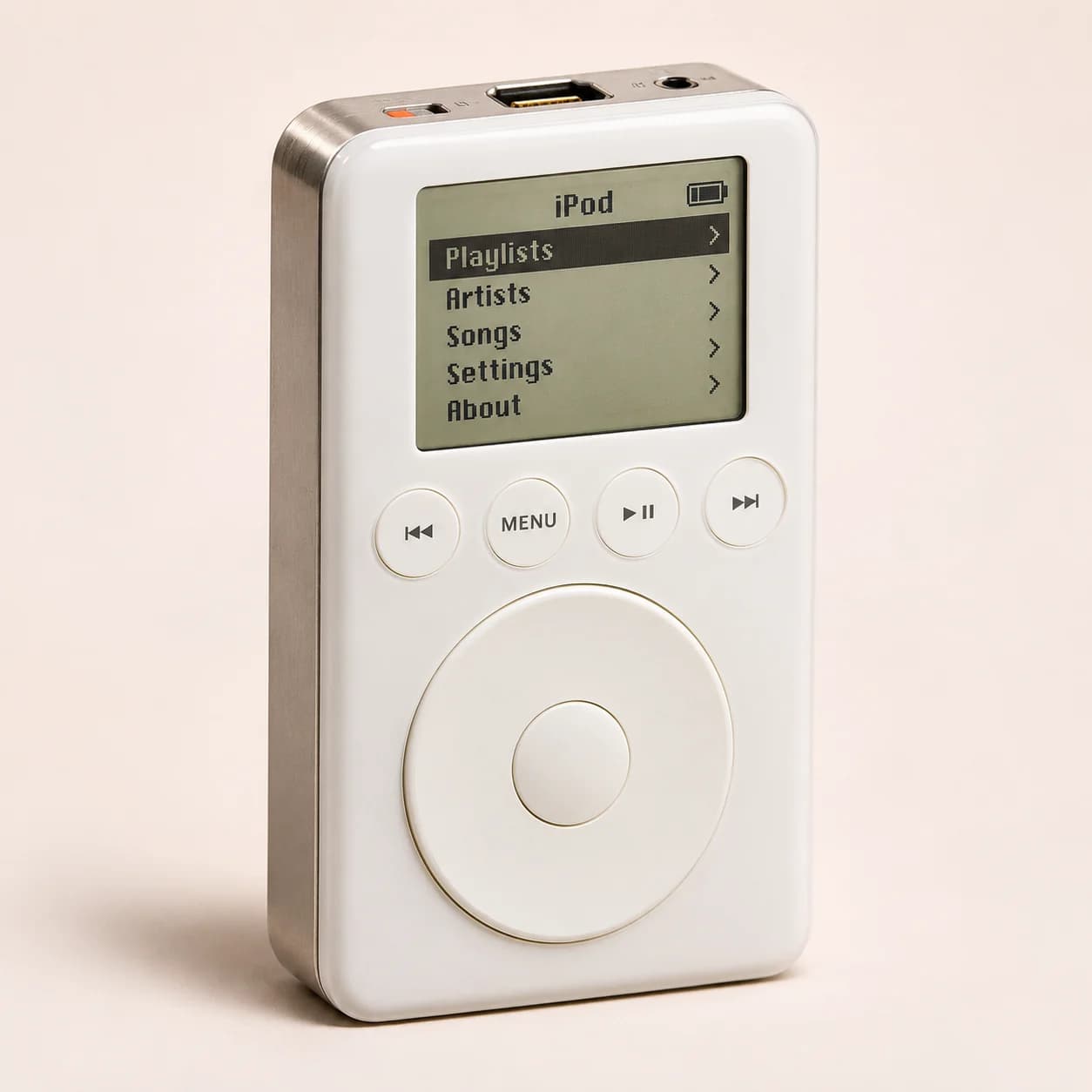
| Sony | Brand | Apple |
What someone wants to know when picking the device up today. The answers are dry, but not invented.
Because you clearly have taste
Documented via: Wikipedia (englisch), Artikel „Walkman“
Caveat: Taken from a secondary source. No contemporary primary document for this figure.
Note: On sale in Japan from 1 July 1979. The article gives “around ¥33,000 (or $150.00)” — the dollar figure is the article's own conversion, not a US list price, and is therefore not carried as a second entry. The yen has no subunit; the two decimal places in the display are a property of the display, not of the price. No purchasing-power equivalent is shown for this amount: a yen amount must not be projected forward with the German consumer price index.
No purchasing-power equivalent: A price for the JP market. The German consumer price index does not apply to it, and the index for that country is not available here.
The purchasing-power equivalent states what sum would carry the same general purchasing power today. It is not a current market price, not a retail price and not a collector's value.
Current listings from external marketplaces. OBSOLET. sells none of them — every link goes to the respective seller.
No matching listing found right now. The technology is evidently ahead of its time again.
Checked at 23/11/2026, 20:09. As soon as something appears, it will be here.
We do not search Kleinanzeigen automatically — but you can set up a saved search there yourself.
No memories yet.
Be the first.
Browsing listings needs no account. An alert keeps running on the server while you are away — that is what needs a sign-in.
Sign in