Genuine tech legend
No memories yet.
OBSOLET. index68 out of 100
Genuine historical products, satirical writing, nothing for sale at OBSOLET.Real devices, satirical writing — nothing for sale.
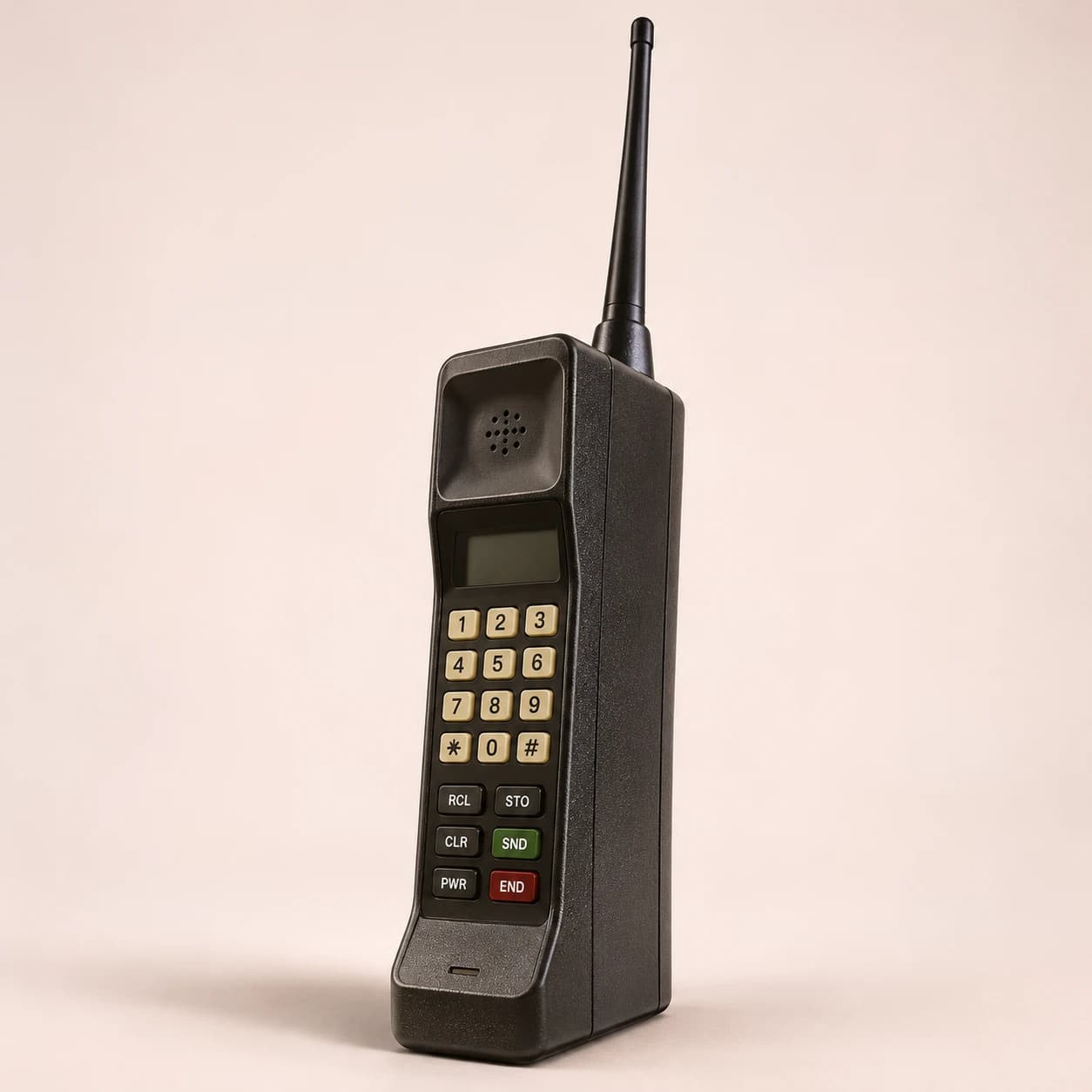
The depiction follows references and may differ in detail.
Mobile calls, with a new definition of portable.
This device really existed. Maker, year and technical details are documented — only the price and the availability are invented.
Documented via: onlinesammlung.museumsstiftung.de
A catalogue entry, not an offer. This device is not for sale here. What can be documented is next to it: the original price of the day with its source, and what that buys today. Anyone actually looking for the device will find real partner offers further down — where there are any.
The analogue network this handset used has been switched off worldwide.
The first portable phone you could actually buy. Portable in the sense that carrying it was possible.
The handset worked on the analogue AMPS network and allowed roughly thirty minutes of conversation. Recharging it afterwards took about ten hours. The ratio was therefore one to twenty, and making a mobile call meant planning the call — and the recovery period that followed it.
No messages, no camera, no browser, nothing capable of updating itself in the background. The LED strip showed the number you had dialled, and thirty numbers could be stored and recalled. That was the complete feature set: making telephone calls, and not having to remember thirty numbers while doing it.
At close to a kilogram and roughly the length of a forearm, it was visible in any meeting. That was not a design oversight but part of the product: anyone carrying it never had to mention that they were carrying it.
Motorola demonstrated a portable radio telephone in the early seventies. Roughly ten years passed before it became something a person could buy — not because of the handset, but because the networks had to be built first. The demonstration showed what was possible; the infrastructure decided when it became possible.
Completely superseded as a telephone. Notable as one of the few mobile solutions you had to decide to bring with you — and therefore used considerably less.
An editorial assessment, not a documented fact. The sections above carry the evidence.
The analogue network this handset used has been switched off worldwide.
A DynaTAC cannot make a call today — not because it is broken, but because the other end no longer exists. This is the rare case of a device whose function was not replaced but extinguished.
Nothing. As an object it is all the more impressive — a telephone you can hear being put down.
An editorial assessment, not a measurement: how completely has this device’s job been taken over by something else?
An editorial comparison: which job was taken over, and what falls away with it.
Editorial assessment. No paid placement, no partner link, no price comparison.
Two devices, one decision, no winner
| Specifications | ||
|---|---|---|
| 100 out of 100 | OBSOLET. index | 68 out of 100 |
| 1984 | Year | 2000 |
| No longer available | Availability | No longer available |
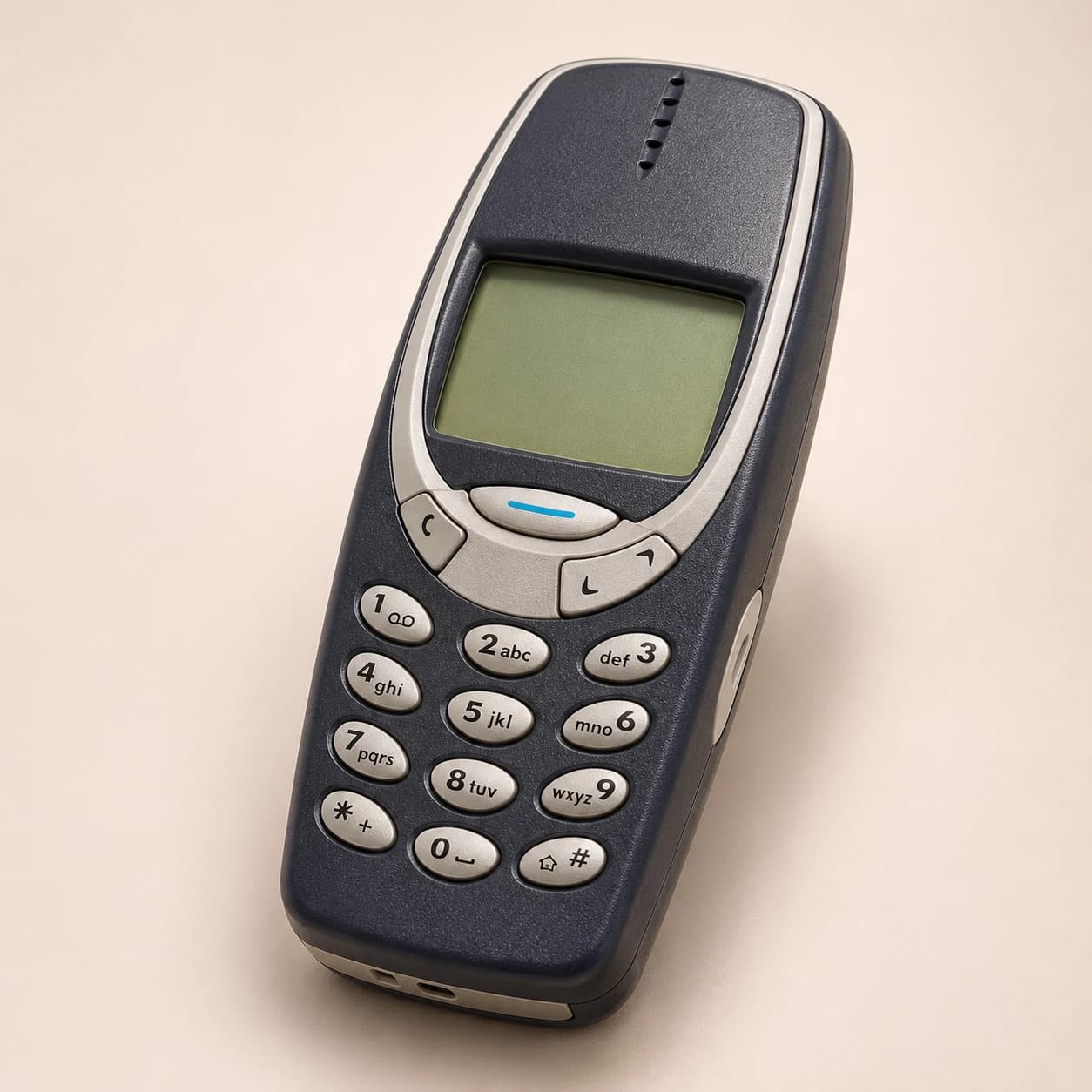
| Motorola | Brand | Nokia |
What someone wants to know when picking the device up today. The answers are dry, but not invented.
Because you clearly have taste
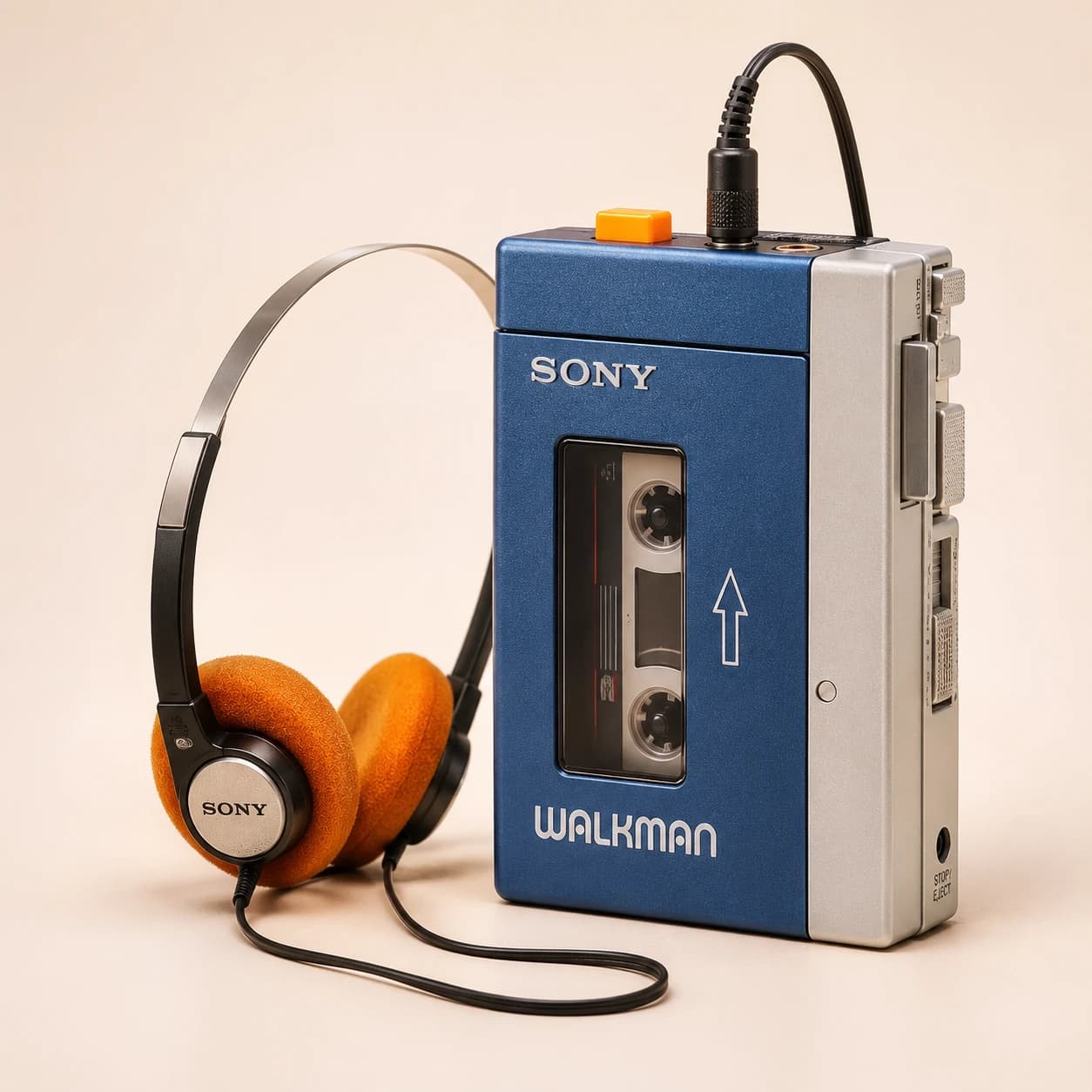
Documented via: Radiomuseum.org, Katalogeintrag „Cellular Brick Phone DynaTAC 8000X“
Caveat: Taken from a secondary source. No contemporary primary document for this figure.
Note: Radiomuseum.org lists the amount as “Price in first year of sale”. The year is disputed: FCC approval and the announcement fell in 1983, while several sources give 1984 as the year of actual market availability. 1983 is given here because the amount refers to the first year of sale. No purchasing-power equivalent is shown for this dollar amount.
No purchasing-power equivalent: A price for the US market. The German consumer price index does not apply to it, and the index for that country is not available here.
The purchasing-power equivalent states what sum would carry the same general purchasing power today. It is not a current market price, not a retail price and not a collector's value.
Current listings from external marketplaces. OBSOLET. sells none of them — every link goes to the respective seller.
No matching listing found right now. The technology is evidently ahead of its time again.
Checked at 23/11/2026, 20:09. As soon as something appears, it will be here.
We do not search Kleinanzeigen automatically — but you can set up a saved search there yourself.
No memories yet.
Be the first.
Browsing listings needs no account. An alert keeps running on the server while you are away — that is what needs a sign-in.
Sign in