Genuine tech legend
No memories yet.
OBSOLET. index93 out of 100
Genuine historical products, satirical writing, nothing for sale at OBSOLET.Real devices, satirical writing — nothing for sale.
The depiction follows references and may differ in detail.
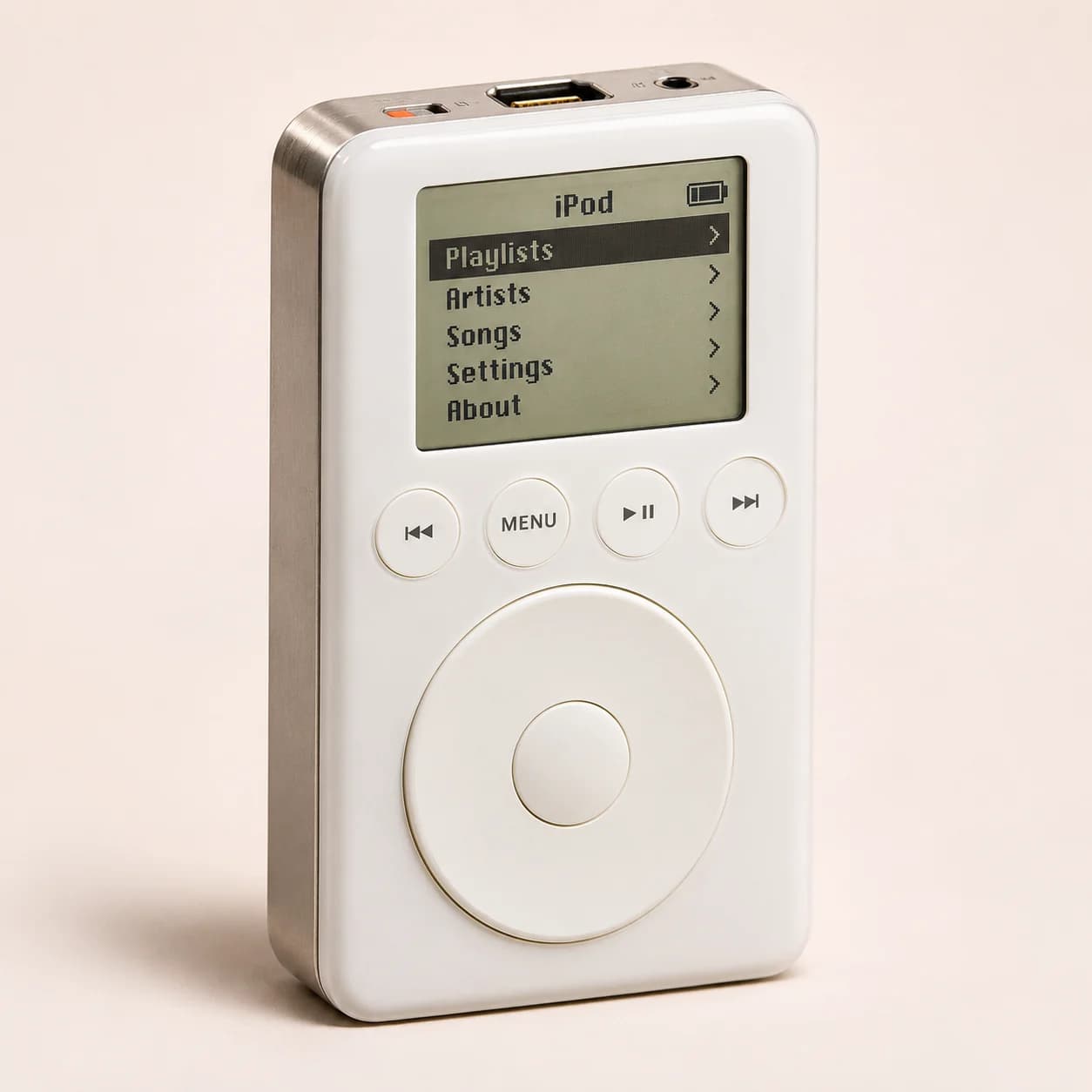
A thousand songs. Not a single push notification.
This device really existed. Maker, year and technical details are documented — only the price and the availability are invented.
Documented via: apple.com
A catalogue entry, not an offer. This device is not for sale here. What can be documented is next to it: the original price of the day with its source, and what that buys today. Anyone actually looking for the device will find real partner offers further down — where there are any.
A device that only plays music has kept no niche: the telephone you carry anyway does the same job.
A thousand songs in your pocket — and the decision about which thousand they would be.
Inside sat a mechanical disk holding five gigabytes. It spun, it grew warm, and when it moved to another track you could occasionally hear it. Music living on something with moving parts was the advance of the moment and would be grounds for a return today.
Control came from a mechanically rotating wheel with four buttons. There was resistance under the thumb and an audible click. Travelling through a long list meant turning for longer — the duration of the gesture matched the length of the list.
The collection did not fit. Before each departure you chose what came along. The sorting was tedious and had the side effect that people knew their own music.
New music arrived when you connected it, over FireWire, from a machine where the library lived. Without that machine the contents stayed exactly as they were. No background service added or removed anything.
Completely replaced by the phone in your pocket. What survives is the sentence that explained the product without quoting a single specification.
An editorial assessment, not a documented fact. The sections above carry the evidence.
A device that only plays music has kept no niche: the telephone you carry anyway does the same job.
On top of that, the first-generation iPod connected over FireWire, a port absent from current computers. And inside the case a real hard disk spins.
Listening to music on something that will not also ring. Five gigabytes of your own files, no connection, no subscription.
An editorial assessment, not a measurement: how completely has this device’s job been taken over by something else?
An editorial comparison: which job was taken over, and what falls away with it.
Editorial assessment. No paid placement, no partner link, no price comparison.
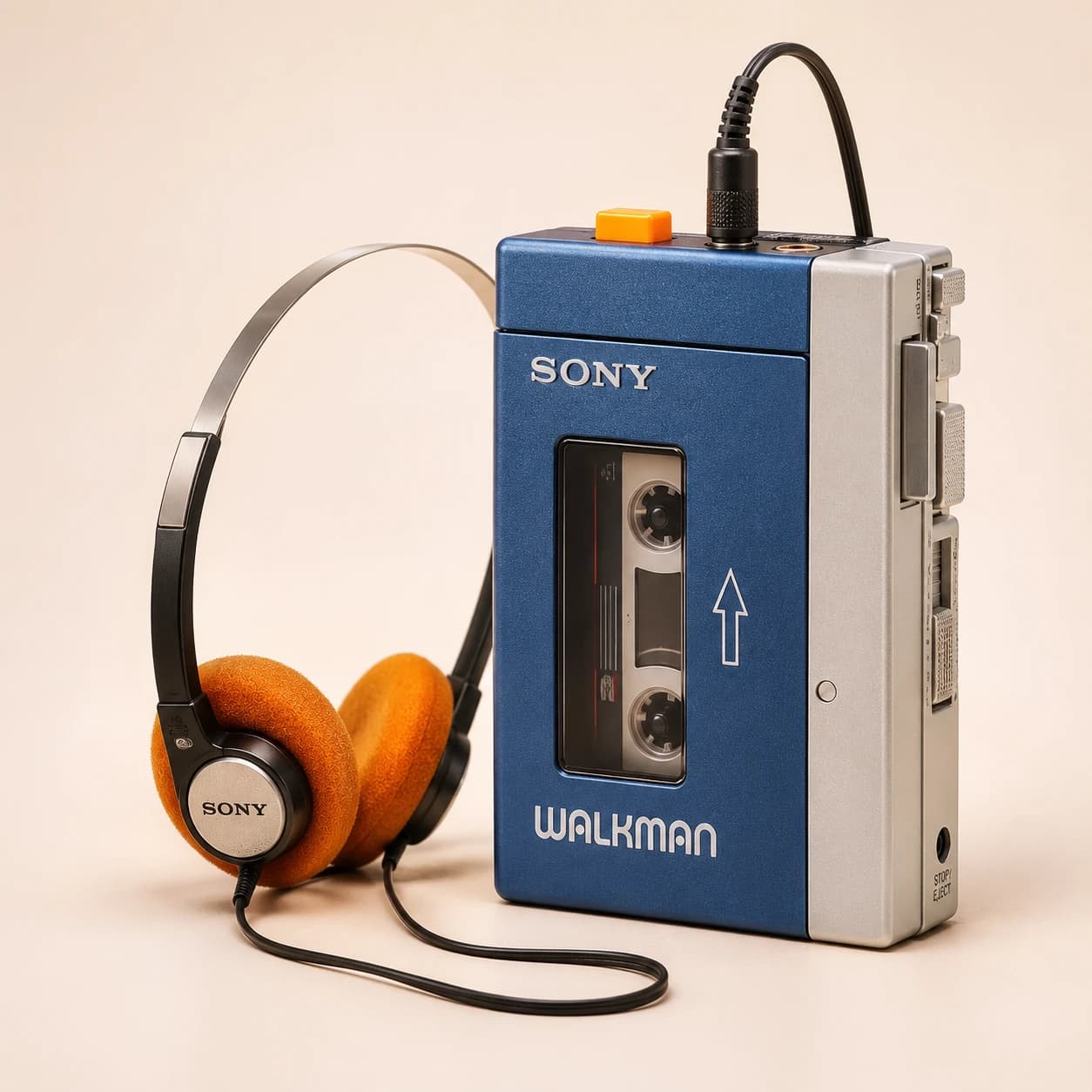
Two devices, one decision, no winner
| Specifications | ||
|---|---|---|
| 91 out of 100 | OBSOLET. index | 93 out of 100 |
| 2001 | Year | 1979 |
| No longer available | Availability | No longer available |
| Apple | Brand | Sony |
What someone wants to know when picking the device up today. The answers are dry, but not invented.
Because you clearly have taste
Documented via: Heinz Nixdorf MuseumsForum, Blogbeitrag „Vor zwanzig Jahren: Der iPod ist da“
Caveat: Taken from a secondary source. No contemporary primary document for this figure.
Note: Presented on 23 October 2001, at first for the United States only and only for Macintosh computers, at 399 dollars. The sales date is disputed: the sources give 10 and 25 November 2001. A German price was examined and not adopted, because the figures contradict each other badly (“just under 500 euros”, “532 euros” for 2002, “1,000 D-Marks”). No purchasing-power equivalent is shown for this dollar amount.
No purchasing-power equivalent: A price for the US market. The German consumer price index does not apply to it, and the index for that country is not available here.
The purchasing-power equivalent states what sum would carry the same general purchasing power today. It is not a current market price, not a retail price and not a collector's value.
Current listings from external marketplaces. OBSOLET. sells none of them — every link goes to the respective seller.
No matching listing found right now. The technology is evidently ahead of its time again.
Checked at 23/11/2026, 20:09. As soon as something appears, it will be here.
We do not search Kleinanzeigen automatically — but you can set up a saved search there yourself.
No memories yet.
Be the first.
Browsing listings needs no account. An alert keeps running on the server while you are away — that is what needs a sign-in.
Sign in